
The basic stability modes are available for use from liftoff to landing. They provide a high level of aircraft stability, both transparent and visible, to the pilot. These modes provide a much more stable aircraft and allow a much lower pilot workload while increasing the ability for precise maneuvering.
The stability Augmentation is performed through dedicated in-line actuators whose high speed, high bandwidth and high accuracy provide rapid and precise reactions to any instability and perturbation including wind gusts, rough air and turbulence. The unrivaled responsiveness of the stability augmentation system contributes to an unmatched ride quality for pilots and passengers
ATRM mode provides basic heading hold and turn coordination on the yaw axis. When below 50kts, or when the roll angle is less than 4 degrees, the AutoPilot will utilize yaw inputs to maintain the heading. When the roll angle exceeds 4 degrees above 50kts the AutoPilot will automatically control pedal position as required to maintain coordinated flight. This allows the pilot to easily perform coordinated turns with simple cyclic inputs while keeping their feet on the floor. Additionally, the manual pedal input normally required with large collective changes is managed automatically by the ATRM function.
The basic flight director AutoPilot modes are available to the pilot to allow true hands-off flight. The modes may be combined such as engaging Heading, Altitude, and Airspeed holding simultaneously or individually as the pilot may desire.
The heading mode enables the AutoPilot to select, capture and track a desired aircraft heading. The heading hold mode is engaged by pressing the HDG button on the control panel. When the mode is engaged, the aircraft will turn to and follow the HSI heading bug.
The IAS mode enables the AutoPilot to capture, maintain and adjust a desired indicated airspeed. The pilot may adjust the speed target by pressing the forward or aft cyclic beep trim switch and releasing when the new desired speed is attained. Should the current airspeed lie outside of the normal operating envelope the AutoPilot will bring the new target back into limits
The ALT mode enables the AutoPilot to capture, maintain and adjust a desired barometric altitude. The pilot may adjust the altitude target by pressing the beep trim switch and releasing when the new desired altitude is attained or using the collective Force Trim Release button for larger changes of the altitude reference.
The VS mode enables the AutoPilot to capture, maintain, and adjust a desired rate of climb or descent speed. The pilot may adjust the vertical speed target by holding the beep trim switch and releasing when the new desired vertical speed is attained or by using the force trim release switch for larger changes.
The RHT mode enables the AutoPilot to capture, maintain, and adjust a desired Radio Altimeter height. The pilot may adjust the height target by pressing the collective beep trim switch or holding the collective force trim switch and releasing when the desired height is attained. The RHT mode is performed by AutoPilot inputs on the collective axis control and may be simultaneously engaged with pitch and roll modes.
The Hover mode enables the AutoPilot to capture, maintain, and adjust a desired ground referenced velocity or a stationary position. When a stationary hover is commanded, the AutoPilot will make the corrections necessary to hold the position regardless of changes in wind speed and direction. The heading of the helicopter will be held automatically and can be adjusted by providing pedal inputs or inputs on the collective beeper.
The Go Around mode enables the AutoPilot to perform a fully hands off wings-level climb at the best rate of climb speed with a single button push. The mode is available for use when airspeed is greater than 50kts. It may be used to terminate an approach procedure, during a departure, or any time the pilot desires to automatically transition to a Vy wings level climb, such as recovery from spatial disorientation or inadvertent IMC encounter. The GA mode is performed by AutoPilot inputs on the pitch, roll, yaw, and collective controls.
The departure mode enables the AutoPilot to perform a straight, steady acceleration and climb from low speed (<50kt) and hover flight conditions with a single button push. This mode is very valuable for automatic recovery from inadvertent loss of visual reference conditions such as white-out and brown-out in hover. It is activated using the same button as Go Around.
This mode provides capture and tracking of the lateral guidance from a GPS/FMS system that is selected as the navigation source by the avionics system. This mode is used to provide a full hands-off following of any route defined in the FMS/GPS.
The AutoPilot provides full hands-off guidance on Localizer, ILS, LP, and LPV approaches. Both the lateral and vertical guidance will be tracked down the approach. When the GS mode is engaged and a valid RadAlt signal is available, the AutoPilot will perform an automatic level off at 50 feet height and continue flying down the runway centerline. Automatic tracking of the approach centerline is performed with roll control inputs, and the glideslope is tracked with inputs to the collective axis. The airspeed hold mode (IAS) may also be engaged during these approaches for a fully hands-off automatic approach to the runway.
When the AutoPilot is engaged in APPR & GS modes on an ILS or LPV approach and the DCEL mode is armed, it will automatically engage during the approach profile to provide a smooth deceleration from any initial approach speed to 70KIAS at approximately 200ft AGL (for ILS) or 300ft AGL (for LPV). The pilot may use the airspeed hold (IAS) mode to fly the initial portion of the approach, then let the AutoPilot automatically engage DECEL and perform a comfortable deceleration to the approach minimums altitude.
The AutoPilot is able to perform a fully hands-off approach from initial approach conditions to a stationary hover at specific RadAlt height. The ATH mode is intended to provide an automatic, hands-off, predictable profile descent & deceleration to hover. The ATH mode is based on a capture and hold a line principle so that the aircraft decelerates in level flight (if necessary, to join the descent profile) and then descends & decelerates using a constant slope relative to the ground. This constant angle approach enables the pilot to easily predict the final hover point. Once the hover targets are reached, the HOV & RHT modes are automatically engaged allowing for a fully hands-off hover. At the end of the description add: The pilot can adjust the descent slope and heading with the collective beep trim switch to precisely direct the aircraft to the desired hover point.
When coupled, the system can automatically limit upward collective movement to ensure engine power limits are not exceeded, or to automatically limit downward collective movement to prevent the helicopter from entering autorotation and high rotor RPM.
The TAWS mode reduces CFIT hazards by automatically commanding an avoidance maneuver upon receipt of an alert from a separately installed Terrain Warning System and when no evasive action is performed by the pilot. TAWS mode is available while the helicopter is in cruise conditions.
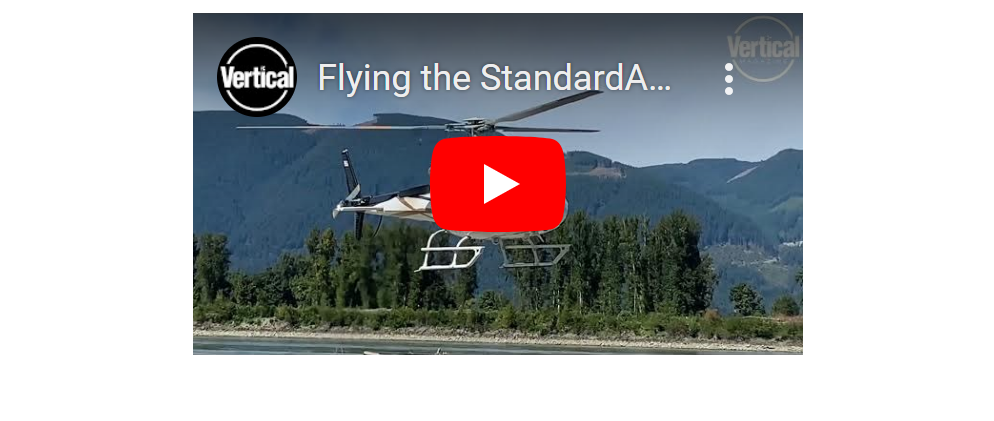
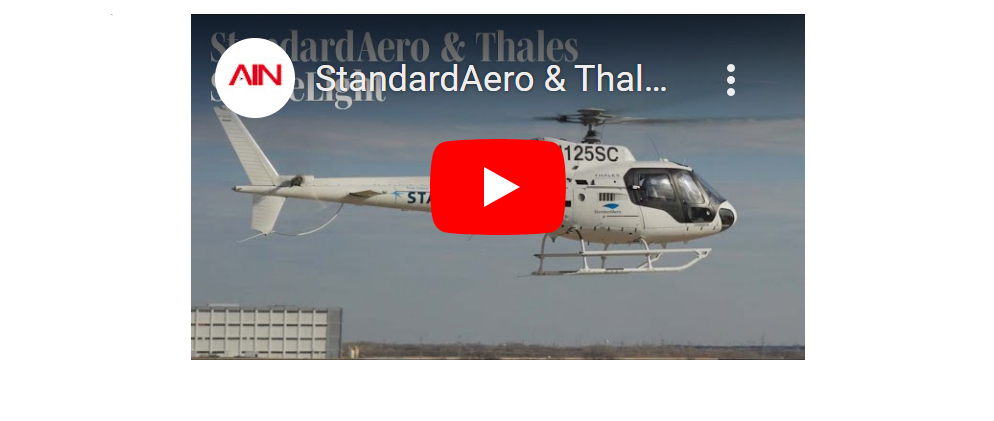
StableLight: The TRUE AutoPilot retrofit that helps AS350/H125 operators get the job done faster and safer!
On this video series, the StableLight development team provides valuable insight into the unique capabilities, features, and 4-axis technology that only a transport category AutoPilot can bring to your AS350/H125 aircraft operations.
Enter the new era of safety and performance for light helicopters. Lift-off!
These Standard Terms and Conditions of Sale for Services (“Terms”), together with the terms of sale of the maintenance, repair and overhaul services (“Services”) as set forth in StandardAero’s catalog, quotation document, or other StandardAero communicated offer document (“Offer”) where applicable, will comprise the entire agreement between the Parties (“Agreement”) for Services on Customer’s components or accessories (collectively “Components”). “Customer” refers to the entity listed on StandardAero’s Offer. StandardAero and Customer may be individually referred to as a “Party” or collectively as “Parties”.
1. StandardAero Affiliates These Terms apply to StandardAero Component Services, and its affiliates named herein, all collectively referred to as “StandardAero”:
Components:
Accessories:
Each Offer shall be deemed a separate contract between the Parties named therein. The Parties acknowledge and agree that any one StandardAero entity shall have no liability nor incur any obligation or be responsible for any failure of any other StandardAero entity to perform its obligations.
2. Terms Acceptance of StandardAero’s Offer shall constitute Customer’s acceptance solely of the Agreement. The Agreement is applicable to all purchase orders or repair orders (an “Order”) placed by the Customer for Services. StandardAero hereby objects to any terms and conditions accompanying any Order or any terms included in Customer’s request for proposal, request for quote, acceptance, acknowledgement, pre-printed on the Customer’s standard form or provided by the Customer in any other manner that deviate from or supplement the provisions of the Agreement and the Customer agrees that any terms and conditions deviating from or supplementing the Agreement are non-binding and deemed to be null and void.
3. Order of Precedence Conflicting Provisions Any ambiguity, conflict or inconsistency between the documents comprising the Agreement shall be resolved according to the following order of precedence: (i) these Terms; (ii) StandardAero’s Offer, unless the Offer explicitly makes reference to a specific provision of these Terms to be deviated from.
4. US Government Orders (Applicable to any Services issued pursuant to any US Government Order where StandardAero is a subcontractor) All Services provided by StandardAero are commercial as defined in FAR 2.101. Upon request, StandardAero will provide its commerciality justification. Accordingly, StandardAero claims exemption from FAR 52.219 Small Business pursuant to 52.219-9(j). Additionally, except with respect to EB Airfoils, LLC, StandardAero claims exemption from FAR 52.222-41 Service Contract Act pursuant to 24 CFR 4.123(e)(2)(1)(A). Services provided under such US Government Orders will be pursuant to FAR 52.212-4. In accordance with FAR 12.302, StandardAero requires terms and conditions in any contract or award be tailored to reflect StandardAero’s Terms contained herein. Namely, the standard clauses applicable to 52.212-4 shall be modified as follows:
In the event FAR 52.212-4 is not applicable, in any event, StandardAero shall apply the above modifications to any like terms within such contract or award.
5. General Procedure StandardAero will perform the Services in accordance with the Agreement. Upon issuance of StandardAero’s Offer, Customer has seven (7) days to provide acceptance. If after fourteen (14) days acceptance and approval to proceed with the Services is not obtained from Customer, StandardAero may at its sole discretion either: (1) ship the Component(s) back to the Customer at Customer’s sole expense; or (2) StandardAero shall charge reasonable storage and handling Either option will be due and payable by Customer upon the issuance of an invoice by StandardAero. Additionally, Customer shall be responsible for any cleaning and inspection fees. StandardAero has no obligation to perform Services and may reject any Order for Services, including but not limited to, circumstances where StandardAero is not authorized to perform under its applicable OEM authorization(s) or by the applicable aviation authority. When Services are complete on the Components and the Customer is notified (“Redeliver(y)”), StandardAero will provide Customer with copies of all completion records required by the applicable aviation authority (“Approved Aviation Authority”). Such records shall be maintained for the shorter of two years from the completion of Services or the applicable airworthiness records retention requirement. All other work records are proprietary to StandardAero and shall not be available for distribution.
6. Shipping Terms Customer will deliver the Components to the designated StandardAero repair facility Delivered Duty Paid (“DDP” Incoterms 2020). Customer will act as the importer of record (“IOR”) and, in any case, Customer is responsible for any and all shipping costs (including any import/export duties, import/ export clearance costs, tariffs, applicable taxes, and insurance) to deliver Components to the relevant StandardAero facility. As IOR, Customer may register as a non-resident importer or if the Customer has a US registered site, the Customer’s US site may act as the IOR. StandardAero will Redeliver the Components to Customer ExWorks (“EXW” Incoterms 2020) at StandardAero’s facility dock. Customer is responsible for any and all shipping costs (including any import/export duties, import/ export clearance costs, tariffs, applicable taxes, and insurance) to deliver Components from StandardAero’s facility dock to Customer’s facility.
If StandardAero agrees in writing to act as IOR, at its so election and discretion, which can be withheld for any reason, StandardAero may utilize a variety of measures to import the goods. All shipping instructions must be agreed to in writing prior to the inbound shipment. Depending on the transaction, the follow instructions may apply:
To facilitate shipments, Customer shall provide a commercial invoice, or the documentation acceptable in place of a commercial invoice, with the entry and before release of the goods is authorized. The commercial invoice or other acceptable documentation shall contain: 1) an adequate description of the Component(s) including, at a minimum, the part number, serial number, and correct country of origin; 2) the quantity of Component(s) sent; 3) the value or approximate value of the Component being sent (e.g. depreciated book value or inventory value); and 4) the appropriate eight-digit subheading from the Harmonized Tariff Schedule as per the International Convention on the Harmonized Commodity Description and Coding System done at Brussels on 14 June 1983 and its amendments. Additionally, Customer shall obtain a Certificate of Origin or Certificate of Airworthiness (if applicable) from the OEM and provide it to StandardAero. Notwithstanding any Incoterms stated herein, in the event that Customer provides a faulty shipping container and StandardAero repairs such container to return the Component, or Customer requires StandardAero to use a shipping container that has been found to not meet StandardAero’s packing specifications, Customer accepts all liability for any loss or damage in transit including for packaging of the Component.
7. Receipt of Parts StandardAero’s signature or electronic confirmation of a shipment delivery is not confirmation of the Components received. Notwithstanding the Incoterms, if the Customer sends in multiple purchase orders along with the Components, or sends a batch shipment of Components, that are not to be inducted by StandardAero for immediate processing due to scheduling capacities, the storage and risk of loss remains with Customer until the Component is properly received and inducted into work in progress (WIP) and may be subject to storage fees. Receipt by StandardAero is confirmed solely when actual items listed in the shipment documents have been visually and physically verified as received within StandardAero’s facility. StandardAero will not be liable for discrepancies between the shipping documents and the Components If available, videography will be used to substantiate any such discrepancy.
8. Exchanges (option at StandardAero’s sole discretion) If Customer is offered an exchange as part of a contract or regular business and Customer declines the exchange it shall be considered an Event of Force Majeure. If such removed parts or Components are later scrapped, condemned or determined to be non-repairable, the parts or Components will be disposed of and Customer will pay the then current market price for the replacement part, less any applicable exchange fee previously If there is a permanent exchange of any part or Component, Customer and StandardAero warrants that their respective titles will be free and clear of all encumbrances for any exchanged item and each shall deliver to the other all documents necessary to transfer title and release any encumbrances. Title to parts and material furnished by StandardAero will pass to Customer upon incorporation in the Components and, simultaneously, title to the parts replaced will pass to StandardAero. StandardAero will return all non-repairable or non-conforming parts upon Customer’s written request, provided that Customer will pay all costs of the return, including without limitation, any and all taxes, duties, imposts and tariffs levied on the value of the returned items (irrespective of the Incoterms listed herein).
9. Prices/Payment Unless stated otherwise on StandardAero’s Offer, StandardAero’s prices for Services are in U.S. Dollars and are subject to change with prior notification to Pricing is applicable to all Orders Redelivered in the current calendar year. Orders that carry over to a subsequent calendar year will be subject to price increases. Prices are based on best available parts and material pricing at the time of Offer. Due to ongoing global trade fluctuations, suppliers may issue tariff related price adjustments, sub-charges, or pass throughs (“Tariff Related Costs”) that are not known or published at the time of the Offer. In the event such Tariff Related Costs are assessed against StandardAero, StandardAero reserves the right to adjust its final invoice accordingly. Any Service that is not priced in the Offer will be invoiced at StandardAero’s standard pricing rates and/or catalog pricing. Unless otherwise stated in the Offer, payment of all invoices is due NET 30 and will be paid by wire transfer as stated on StandardAero’s invoice, immediately available for use and without set-off. Should there be a delay of payment, without prejudice to its other rights and remedies under the Agreement and/or at law, StandardAero has the right to charge interest, compounded daily, on any amounts (including the late fee) not paid when due. The interest will accrue from the 15th day after the payment was due at a rate 2% above the annual prime interest rate, as determined by Wall Street Journal (WSJ) or its successor entity, on each day the payment is delinquent. The interest payment will be due and payable on the first day of each month after interest begins to accrue until full payment of the amount due is made. Credit terms may be granted upon completion of a satisfactory credit check. If Customer’s account becomes delinquent, Customer will grant StandardAero commercially acceptable assurances of payment. StandardAero reserves the right to withdraw or make modifications to credit terms at its sole discretion.
10. Taxes Other than taxes StandardAero owes on monies earned, Customer agrees to pay all taxes, duties, tariffs, fees, charges or assessments of any nature that are assessed or levied in connection with the Customer shall indemnify and hold StandardAero harmless from the payment or imposition of any tax or levy imposed on any Services, plus penalties, interest, and reasonable attorney’s fees connected with the imposition of any such tax or levy.
11. Trade Compliance (Export Control Regulations) The Components that are the subject of this Agreement and related technology are subject to export and re- export restrictions under U.S. and other countries’ export control regulations, including without limitation the U.S. Export Administration Regulations, U.S. Department of State, Directorate of Defense Trade Controls (ITAR), regulations of the S. Office of Foreign Asset Controls and comparable laws and regulations of other countries, which may require U.S. or other government approval for any re-export or retransfer (“Export Control Regulations”), and Canadian Export Control Regulations. Customer warrants that it (1) will adhere to and comply with (a) all applicable Export Control Regulations and (b) any applicable terms, conditions, procedures and documentation requirements made known to Customer that may be promulgated by StandardAero from time-to-time to comply with the Export Control Regulations; (2) will not, directly or indirectly through a third-party, ship StandardAero materials to Cuba, Iran, North Korea, Syria, Sudan or any other country subject to trade embargoes in violation of Export Control Regulations. Customer acknowledges that StandardAero will not proceed with a shipment when StandardAero knows that the products in that shipment are destined for a sanctioned country. Customer warrants and will undertake the process of securing all required export licenses when contractually obligated to do so. Customer represents that neither Customer nor any of its principals, officers, or directors, or any person or entity known to Customer to be directly involved in this transaction as freight forwarder, customer, end-user, consultant, agent or otherwise is designated on any of the U.S. government restricted parties lists, including without limitation the U.S. Commerce Department Bureau of Industry and Security Denied Persons List, Entity List or Unverified List, the U.S. Treasury Department Office of Foreign Asset Controls Specially Designated National and Blocked Persons List or the U.S. State Department Directorate of Defense Trade Controls Debarred Parties List or restricted parties lists of any country having jurisdiction over Customer or the transaction involving the goods that are the subject of this document or related technology.
12. Anti-Boycott Provisions Customer will not request of StandardAero information or documentation where the purpose of such request is to support, give effect to or comply with a boycott of any country in contravention of the laws or policies of the United States, including but not limited to the Arab League boycott of StandardAero hereby rejects any such request by Customer and will report receipt of any such request to the relevant U.S. government office, as required by law.
13. Excusable Delays and Force Majeure Customer will excuse StandardAero and its subcontractors/suppliers from, and StandardAero and its subcontractors/suppliers will not be liable for, any delay in performance due to causes beyond StandardAero’s or its subcontractors/suppliers reasonable control, including but not limited to: (1) war, warlike operations, armed aggression, insurrection, riots; (2) fires, explosions, collapse of building or any other peril or accident; (3) any acts of a Government, governmental priorities, allocation regulations or orders; (4) acts of God (including but not limited to floods, earthquakes, tropical storms, tornados, or other inclement weather) or of the public enemy; (5) failure of or delays in transportation; (6) epidemics, pandemics, public health emergencies or quarantine restrictions; (7) inability to procure materials, equipment or parts including unavailability of Original Equipment Manufacturer (“OEM”) parts or other supply chain disruptions; (8) labor troubles causing cessation, slowdown, work stoppage or interruption of work; (9) work stoppages resulting from any of the events stated herein; (10) a change in applicable law after the effective date of the Agreement; (11) approval, passing, enactment or changing of sanctions laws, export/import control laws or related regulations that impact or constrain the performance of the obligations of StandardAero or any of its supplier or vendors; and/or (12) delays of any type that are caused by Customer (each, and “Event of Force Majeure”). In addition, an Event of Force Majeure shall include capacity interruptions caused by surge or bulk shipments (“Surge”) that have not been coordinated or forecasted by Customer with StandardAero prior to delivery to StandardAero’s facility or resulting from the events listed herein or other global conditions. For purposes of this clause, “Surge” shall be defined as any fluctuation of volume greater than 10% of normal StandardAero may invoice Customer for all completed Services as well as any equitable adjustments that may be reasonable under the circumstances.
14. Customer Delays and Work Stoppages (a) If Customer causes a delay, StandardAero may stop Services on Customer Components, which may result in a greater than day-for-day delay in the completion of Components may be placed in storage in accordance with Articles 25, 27, and 28. (b) Once an Order is accepted by StandardAero, such Order may not be cancelled or postponed. If Customer causes any postponement or stoppage of Services, Customer will be liable to StandardAero for any postponement costs associated with the work stoppage including but not limited to handling, reasonable storage fees, inspections and preservation costs. Customer agrees that such postponement charges will be invoiced monthly and invoices are due and payable when received by Customer. Customer further understands that the Services will not be resumed until such invoices are paid in full. Upon lifting of the work stoppage, StandardAero will assess the impact to the Redelivery schedule and provide Customer with a new Redelivery date.
15. Warranty StandardAero warrants that, for a period of one year after the date of Redelivery, the Services will be free from defects in workmanship. A defect shall mean the failure of a Component serviced by StandardAero to function in accordance with the OEM’s requirements due to StandardAero’s workmanship. No warranty is given for new parts embodied by StandardAero. StandardAero will pass through to Customer any available manufacturer parts warranty and will use commercially reasonable efforts to assist Customer with administration of such warranty claims. StandardAero disclaims all liability for any Customer furnished parts or material (including, but not limited to, any parts embodied in the unit and reused during the performance of Services) provided by Customer. To the extent that a part incorporated into the Services is designed and manufactured by StandardAero, the OEM requirements may be substituted by StandardAero with the applicable airworthiness authority’s requirements and StandardAero warrants the material of the manufactured part for a period of one year after the date of Redelivery. If used serviceable material (“USM”) is utilized by StandardAero in the performance of Services, StandardAero warrants the USM will be free from defects for ninety (90) days after the date of Redelivery. If the Services performed do not meet this warranty, StandardAero will promptly, at StandardAero’s option, either (1) re-perform the defective Services; or (2) refund the repair price allocable to the defective Services. The warranty period on any such re-performed Services will be the unexpired portion of the original To obtain warranty coverage, defects in workmanship must be discovered within the warranty period and StandardAero must be given prompt notice in writing no later than 30 days from the date the Customer knew or should have known of the defect. The Component must be returned together with the applicable Offer and Order to StandardAero no later than 15 days after such notification is made. Customer must make any previously attached or related parts available to StandardAero upon request to assist in determining the cause of the defect. StandardAero shall not provide warranty coverage for defective products that are sent for investigation or repair to a third-party without StandardAero’s prior written consent. Shipments shall be prepaid by Customer. StandardAero will reimburse Customer for reasonable freight charges Customer incurs for return of parts to StandardAero’s facility for valid warranty claim repairs. In the event that a warranty claim is denied, the Component shall be returned to Customer ExWorks (“EXW” Incoterms 2020) at StandardAero’s facility dock and the cost of disassembly and reassembly to disclose the claimed defect and the cost of preparation of any technical report shall be borne by Customer at StandardAero’s current applicable hourly rates. THIS WARRANTY IS EXCLUSIVE AND IN LIEU OF ALL OTHER WARRANTIES, INCLUDING WARRANTIES OF MERCHANTABILITY AND FITNESS FOR A PARTICULAR PURPOSE. IN NO EVENT WILL STANDARDAERO BE RESPONSIBLE FOR INCIDENTAL, RESULTANT, CONSEQUENTIAL OR PUNITIVE DAMAGES. This warranty is granted only to Customer (the original party requesting Services- for clarification, warranty may not be requested by end users or subsequent buyers of a Component) and not assignable. StandardAero may deny warranty coverage if any one or more of the following warranty exclusions affect or apply to the Component or any part of a Component: (1) accident, abuse, misuse, neglect or wrongful act by Customer, its employees, agents or assigns affecting the Component or any part thereof and however occurring, including any consequence of any malicious act or sabotage; (2) use of parts not approved by StandardAero or the OEM; (3) failure to transport, store, install, operate, handle, test, maintain and/or repair the Component or any part thereof in accordance with the recommendations of the OEM (or StandardAero, if an accessory is manufactured by StandardAero) as stated in its manuals, service bulletins, airworthiness directives or written instructions; (4) alternations, modifications or repairs by anyone other than StandardAero; (5) loss or damage from external causes including foreign object damage (FOD), burglary, theft, environmental conditions, fire, or explosion; (6) loss or damage resulting from failure or improper operation of external systems; (7) loss or damage resulting from delay or failure on the part of the Customer to comply with any of its obligations under this Agreement; (8) loss, damage or failures attributable to prior maintenance, the lack of maintenance, and/or failures resulting from the maintenance performed or parts installed by persons other than StandardAero, or attributable to the condition of the Component regardless of whether such Component’s condition is patent or latent, known or unknown, to the Customer and/or StandardAero at the time such Component is delivered to StandardAero hereunder; and/or (9) any consequence of war, invasion, act of foreign enemy, hostilities (whether war declared or not), civil war, rebellion, revolution, insurrection, mutiny, riots, labor troubles, strike, lockouts, civil commotion, military or usurped power, or attempts at usurpation of power, acts of a group of malicious persons or person acting on behalf of or in connection with any political organization, conspiracy, confiscation, commandeering, requisition or destruction of or damage to property by order of any de jure or de facto or by any public authority, governmental priorities, allocation regulations or orders, epidemics, pandemics, public health emergencies, or quarantine restrictions.. Warranty claims shall be denied in the event the Customer is in material nonconformance with this Agreement or is in arrears for a period in excess of ninety (90) days from its payment terms.
16. StandardAero Indemnity StandardAero will indemnify Customer from third-party losses for bodily injury or death of any person caused solely by StandardAero’s grossly negligent performance of the Services. In order to obtain such indemnification, Customer shall promptly give notice of such claim (but no later than 30 days after Customer received notice of the claim); provided, however, StandardAero will not be required to indemnify Customer for any losses arising from Customer’s negligence or misconduct. The indemnification provided hereunder will be Customer’s sole and exclusive remedy for such third-party losses. StandardAero will indemnify Customer from and against all losses resulting in injuries or damages suffered by employees of StandardAero to the extent they arise from negligence in performance of the Services hereunder. The indemnities provided herein will expire at such time the Components are serviced by any other service provider or the warranty expires, whichever occurs For the purposes of this article, third-party shall not include any affiliate of Customer or a customer of Customer.
17. Customer Indemnity Customer will indemnify StandardAero from third-party losses for damage to or destruction of any property (including the Components) or any injury to or death of any person caused by: (1) the Customer’s negligence or willful misconduct; and/or (2) Customer’s or a third-party’s use, operation, repair, maintenance, or disposition of the Components and any claims related to use of customer furnished property utilized by StandardAero in the provisioning of the Services; provided, however, Customer will not be required to indemnify StandardAero for any losses caused solely by StandardAero’s gross negligence in its performance of the Services. Customer will indemnify StandardAero from and against all losses resulting in injuries or damages suffered by employees of Customer in connection with the employees’ employment with Customer in connection with such employee’s actions or inactions in fulfilling the obligations under the Agreement other than claims arising from injury to the employee as a direct result of StandardAero’s gross negligence in performance of the
18. Limitation of Liability The total liability of StandardAero will not exceed the dollar value of the price of the Services provided giving rise to the claim. Neither Party will be liable for indirect, special, incidental, punitive or consequential damages including, without limitation, loss of use, revenue whether as a result of breach of contract, warranty or any other claims at law or in equity including claims for fraud or tort. StandardAero shall not be responsible for any loss or damage resulting from unit value depreciation. This limitation of liability applies to the maximum extent permitted by applicable law and regardless of whether any liability arises from breach of contract, warranty, tort, by operation of law, or otherwise, however, this limitation of liability does not apply to instances of gross negligence (as defined by the governing laws of the state of New York) or willful misconduct. The customer hereby waives, and releases StandardAero from, any and all claims for any amount in excess of the amount specified in this Section.
19. Waiver of Claims Customer acknowledges that Services performed by StandardAero are conducted in accordance with the Original Equipment Manufacturer (“OEM”) or their suppliers’ technical data, manuals, and/or specifications (“OEM Specifications”). Such OEM Specifications are provided to authorized repair stations and StandardAero for the benefit of Customer. StandardAero makes no warranties as to the adequacy of the OEM specifications. Except for claims based on StandardAero’s failure to comply to such OEM Specifications as listed in Article 15 ( Warranty) specified herein, Customer shall waive any recourses against StandardAero, the OEM, or the OEM’s supplier and shall not assert any claims of any nature, against StandardAero, the OEM, or the OEM suppliers who provide manuals and/or specifications whether in contract, tort (including negligence or fault of any degree) or otherwise, including any special, incidental, consequential or punitive damages, or costs and expenses incurred in litigation or any other proceeding or action, whether or not such litigation is dismissed, directly or indirectly arising out of or in connection with StandardAero’s performance of the Services to the extent such claims arise out of the use of any of the OEM Specifications. ANY WARRANTY(IES) ELSEWHERE IN THESE TERMS ARE EXCLUSIVE AND CUSTOMER HEREBY WAIVES ALL OTHER REMEDIES, WARRANTIES, GUARANTEES OR LIABILITIES, EXPRESSED OR IMPLIED, WITH RESPECT TO THE OEM SPECIFICATIONS AND/OR CUSTOMERS DATA OR SPECIFICATIONS DELIVERED TO STANDARDAERO TO PERFORM SERVICES, ARISING BY LAW OR OTHERWISE, INCLUDING WITHOUT LIMITATION, ANY OBLIGATION OR LIABILITY ARISING FROM NEGLIGENCE OR TORT OR WITH RESPECT TO FITNESS, MERCHANTABILITY, LOSS OF USE, REVENUE OR PROFIT, INTELLECTUAL PROPERTY INFRINGEMENT, OR FOR ANY OTHER DIRECT, INDIRECT, INCIDENTAL OR CONSEQUENTIAL
20. Statutory Periods Customer agrees that any action in relation to an alleged breach of the Agreement shall be commenced within two years of the date of the breach, without regard to the date the breach is discovered. Any action not brought within the two-year time period shall be barred, without regard to any other limitations period set forth by law or
21. StandardAero Insurance StandardAero, at its expense, will maintain until Redelivery of the Components the following insurance coverage: Aviation Products Liability including Aviation Premises, Products and Completed Operations and Hangarkeepers Liability (coverage applicable only in the event of StandardAero’s negligence) for a Combined Single Limit Bodily Injury and Property Damage in the amount of $50,000,000 each occurrence (aggregate in respect of products liability).
22. Customer Insurance Customer shall, at its expense, procure, maintain and keep in full force and effect insurance to protect the value of the Components while in transit and during the care, custody or control of StandardAero. Additionally, Customer shall maintain, at its expense, and keep in full force a general liability policy with minimum limits of $50,000,000 per occurrence including for any incidents involving aviation accidents. Customer shall provide evidence substantiating such coverage at StandardAero’s request.
23. Confidentiality The Parties shall treat as strictly confidential all provisions of the Agreement and any information disclosed by one Party to the other in furtherance of the Agreement, with the exception that the receiving Party may share information in the following limited circumstances: (1) to its employees or professional advisors on a strictly need-to-know basis and only after, as applicable: (a) advising its such employees of the requirements of this provision; or (b) having any such third-party(ies) sign a non-disclosure agreement; (2) as may be required to be disclosed for an investigation by a governmental authority or other mandatory legal process only to the extent legally required and only after giving notice to the disclosing Party with sufficient time to allow that Party to commence a legal process to limit such disclosure; (3) is in the public domain through no breach of the confidentiality obligations contained herein; (4) was independently developed by the receiving Party supportable by documentation; or (5) to the extent reasonably required to be disclosed to commence, in furtherance of, or to enforce any rights or obligations of a Party under the Agreement or any judgment arising out of, any court proceeding or other dispute resolution proceeding related the Notwithstanding the foregoing, StandardAero may provide information about the Components and/or the Services performed to the aviation authority(ies) and/or to the OEM to the extent required by the applicable aviation authority(ies) or by StandardAero’s OEM authorization(s).
24. Termination Either Party may terminate the Agreement upon fifteen (15) days’ written notice for breach of any material provision, unless such breach is cured within the fifteen (15) days. StandardAero may terminate the Agreement immediately if Customer: (1) fails to make any of the required payments when due; (2) makes any agreement with Customer creditors due to Customer’s inability to make timely payment of Customer’s debts; (3) enters into compulsory or voluntary liquidation; (4) becomes insolvent; and/or (5) becomes subject to the appointment of a receiver of all or a material part of Customer assets. Upon any such termination, Customer will not be relieved of Customer’s obligation to pay for Services performed and Customer’s Components may be placed into storage in accordance with Article 27 (Disposition of Property and Storage Costs). In the event of changes to an OEM license or authorization, StandardAero, in its sole discretion, may: (i) renegotiate the Agreement with Customer (Parties to negotiate new terms within fifteen (15) days of said notice by StandardAero); or (ii) terminate the Agreement immediately. In no event may Customer terminate, postpone, cancel, or reschedule an Order once it has been accepted by
25. Risk of Loss Notwithstanding any other provision in the exchange of documents between the Parties and irrespective of the Incoterms or shipping terms listed in the Offer or Order, StandardAero and its subcontractors expressly disclaim any liability for loss or damage resulting from any Event of Force Majeure. To the extent permitted by law, Customer expressly waives any rights to claims under bailment principles. If such waiver is not permitted by law, Customer agrees that an Event of Force Majeure listed in these Terms fall outside a duty of reasonable or ordinary care to protect the goods.
26. Risk of Repair Due to the challenges inherent to the performance of a Service related to: (1) electroplating and metal finishing; (2) damage to the Component due to metal imperfections while processing; (3) damage to the Component due to changes in grade or composition of materials; (4) damage to the Component due to original manufacturing and/or fabrication imperfections; and/or (5) similar plating or metal finishing defects from metal processing that occur outside the reasonable control of StandardAero including any operations or processes performed by StandardAero related to “salvaging” parts or materials, such work will be performed on a “reasonable efforts” basis and Customer will pay in full the prices for the Services performed and no liability will attach to StandardAero regardless of the results. For clarification, Customer acknowledges that the beforementioned processes and repairs proposed or undertaken by StandardAero are at Customer’s sole
27. Disposition of Property and Storage Costs If Customer’s Components: (1) cannot be Redelivered when ready due to Customer’s (a) act or failure to act, (b) refusal to accept Redelivery, or (c) request that Redelivery not be made when otherwise ready; or (2) are required to be placed on hold due to an Event of Force Majeure or at the direction of Customer, StandardAero may make Redelivery by placing the Components in storage. In such event: (1) all reasonable expenses StandardAero incurs for activities such as, but not limited to, preparation for placement into storage, handling, reasonable storage fees, inspection and preservation will be due and payable on receipt of StandardAero’s invoice for same; and (2) all risks of loss associated with the Components will pass to Customer upon placing the Components in storage. Additionally, StandardAero shall have the right to dispose of the Components without any further notice as it sees fit, including but not limited to, selling, destruction of, or scrapping of said Components. Such right to dispose of the property shall also apply if arrangements are not made by Customer within ninety (90) days after notification from StandardAero that the Components need to be dispositioned. If the Components are sold, any proceeds shall be utilized as payment toward any amount due to StandardAero. Said rights are in addition to any other rights StandardAero may have to seek
28. Customer Furnished Material Consistent with the charges specified in the Offer and with StandardAero’s prior written approval, Customer may supply agreed parts to StandardAero if the part is: (1) furnished with an Approved Aviation Authority serviceability tag, when applicable; and (2) ready for immediate use (“Customer Furnished Material”). If Customer’s delay in providing Customer Furnished Material delays StandardAero performance, StandardAero may supply the parts at Customer’s expense. StandardAero disclaims all liability for Customer Furnished Material and Customer will indemnify StandardAero from and against any and all claims, demands, losses, costs and expenses for the performance of such Customer Furnished Material. Customer Furnished Material shall be subject to a material handling fee as specified in the
29. Ethics StandardAero follows its own ethics code of conduct (“Code of Conduct”). In the event Customer has its own code of conduct, it is Customer’s responsibility to review and verify that StandardAero’s Code of Conduct is aligned with the principles of Customer’s code. In no event shall StandardAero be governed or subject to customer’s code of conduct. Customer acknowledges and confirms that all amounts paid or related to the Agreement shall be for actual services rendered. Under no circumstances shall either Party, its employees, agents, or other person operating on its behalf, accept, offer, promise, give, or agree to give any money, gift, loan, or other benefit or advantage, either directly or through intermediaries, to a Public Official, (or private person in the case of the U.K. Bribery Act), for that official, private person or third-party, to exert influence, act or refrain from acting in relation to the performance of official duties, in order to obtain or retain business or other improper advantage under the Agreement. As used herein, “Public Official” (or “Government Official”) includes, without limitation, (1) any official, employee, or agent of, or one who is in any manner connected with, any government or government entity, including any department, agency, instrumentality of any government, government-owned entity, or government- controlled entity, or any person acting in an official capacity thereof; (2) any candidate for political office, any political party or any official of a political party; (3) any director, officer, or employee of a public international organization (e.g. United Nations, World Bank, or International Monetary Fund); or (4) any member of a royal or ruling family. Customer represents and warrants to StandardAero that it will comply with all laws of the country(ies)/territory(ies) where Customer operates which are applicable to the performance under the Agreement, including without limitation, the U.S. Foreign Corrupt Practices Act (“FCPA”), the K. Bribery Act (“U.K. Act”), the Corruption of Foreign Public Officials Act of Canada (“CFPOA”) and the Organization for Economic Co-Operation & Development (“OECD”) Convention on Combating Bribery of Foreign Officials in International Business Transactions (collectively “Ethics Legislation”). Nothing contained herein will require StandardAero to make any payment directly or indirectly under the Agreement which in StandardAero’s good faith determination violates or is inconsistent with the Ethics Legislation. The Parties represent and warrant that no agent, finder, or commercial intermediary was instrumental in arranging or bringing about this transaction and that there are no claims or rights for commissions, fees or other compensation by any person or entity claiming by, through or in connection with this transaction.
30. Cybersecurity, Environmental, and Social Governance Compliance
StandardAero acknowledges that there are various initiatives both domestically and internationally with respect to general compliance issues, including but not limited to cybersecurity, environmental, ethics, and social governance issues. StandardAero maintains its own compliance efforts which may be found at: https://standardaero.com/aboutus/corporatesustainability/. If an independent evaluation is requested by Customer, StandardAero shall provide information pertaining to its third-party assessment issued by a provider selected at StandardAero’s sole discretion. In no event shall StandardAero provide responses to customized or Customer specific questionnaires or surveys whether issued by Customer’s supply chain organization or other means.
31. Dispute Resolution and Governing Law The Agreement and Services rendered thereunder shall be governed by the laws of the State of New York, (excluding its conflict of law provisions, the UN Convention on Contracts for the International Sale of Goods, and any laws which govern the validity, perfection, or creation of any lien or security interest hereunder, and the exercise of rights or remedies with respect of such lien or security interest for a particular item which will be governed by the laws of the applicable jurisdiction pertaining to liens). All procedural matters are to be governed by the Federal Rules of Civil Procedure unless the Parties agree otherwise in If any dispute, controversy or claim arises out of or in connection with the Agreement (a “Dispute”), the Parties shall first attempt, in good faith, to resolve the Dispute through negotiation between their designated senior management representatives for a period of thirty (30) days from the date of notice of the Dispute sent by one Party to the other Party (“Dispute Notice”). The Party sending the Dispute Notice shall, in such notice: (1) set forth the specifics of the Dispute in detail; and (2) designate its senior management representative. The other Party shall, within five (5) business days after receiving the Dispute Notice and by written notice to the initiating Party, designate its senior management representative and add any other issues or claims for resolution not identified in the Dispute Notice.
32. Subcontracting StandardAero has the right to subcontract any Service to any subcontractor that is properly certified by the Approved Aviation Authority, where applicable, or is an approved StandardAero
33. Assignment The Agreement may not be assigned without the prior written consent of the other Party, except that Customer consent will not be required for an assignment by StandardAero to one of StandardAero’s affiliates.
34. Waiver of Immunity If Customer is incorporated or based outside the United States, to the extent that Customer becomes entitled to sovereign or other immunity from any legal action, Customer waives such immunity in connection with the
35. Language, Notices All correspondence and documentation connected with the Agreement will be in English, given in writing, effective upon receipt, and provided to the addresses set forth on the Offer, which may be changed by written
36. Non-Waiver of Rights and Remedies Failure or delay in the exercise of any right or remedy under the Agreement will not waive or impair such right or No waiver given will require future or further waivers.
37. Survivability Any portion of the Agreement determined to be contrary to any controlling law, rule or regulation will be revised or deleted and the remaining balance will remain in full force and
38. Entire Agreement The Agreement shall constitute the entire understanding between Customer and StandardAero with regard to the Services provided and supersedes all prior agreements, understandings, or arrangements between the Parties.
This Catalog Confidentiality Agreement (“Agreement”) establishes the terms of use, handling, protection, and safeguarding by Customer (“Customer” shall mean the person requesting access to the Catalog and their employer) required for access StandardAero’s prices (“Catalog”) to procure repair and overhaul services (“Services”) from StandardAero (hereinafter the “Purpose”).