
A 4-axis autopilot highly reduces the pilot workload and provides fully hands-off flight capability. Thus, the pilot can focus on the mission and being more efficient.
In addition, StableLight™ provides dedicated and unmatched safety features such as one button stableized climb flight attitude recovery mode and an HTAWS triggered automatic Go Around mode (also known as Auto-pull up).
This 4 axis AutoPilot has been designed to be easy to use with unique and intuitive “current flight parameters” capture and holding modes. Pilot training will be available with the STC sale.
The stability augmentation control inputs generated by the in-line smart actuators, do not feedback to the control sticks and are thus not felt by the pilot. This makes the aircraft easier to fly without interfering with the pilots own inputs to the flight control system.
Yes. If for training purpose or for any other reason, the pilot wants to fly the “raw aircraft”, the AP can be switched off and the aircraft flown as originally designed.
Collective management. 2 or 3 axis AutoPilots provide basic assistance by working on those axis controlled by the pilot’s right hand but can never relieve his left hand on the collective. A 4-axis AutoPilot provides fully hands-off flying capability.
In addition, the most important safety features, such as the stabilized climb flight attitude recovery and HTAWS auto-pull up functions, require collective control to perform the maneuvers automatically.
These two modes radically improve the sensation of flying in this helicopter. The Stability Augmentation System (SAS) delivers a smooth flight experience by providing transparent stabilization inputs directly to the pitch, roll and yaw controls in response to short-term disturbances that could be caused by turbulence, gusts, buffeting, or other aerodynamic instabilities.
The Attitude Retention Mode (ATRM) adds to the basic stabilization and automatically returns the helicopter to the last attitude set by the pilot after any disturbance.
StandardAero and Thales believe in investing in Safety. This is why we have chosen to bring this new system to the light helicopter market.
Because this is the first 4-axis system that has ever been made available for aircraft that perform the types of missions that these light turbine helicopters frequently perform, StandardAero and Thales are excited to help operators take advantage of the numerous benefits the system can provide, by reducing pilot workload and increasing mission efficiency: both good investments for any operator.
All VEMD equipped, AS350 B2/B3(e) and H125.
VEMD. A radio altimeter (RADALT) is also required to ensure accurate altitude sensor inputs for features like height/ hover hold. However, a RADALT installation is available as part of the STC.
Yes, installation services are available with the STC and kit.
No airworthiness limitations are associated with this type design change.
Notable limitations are:
The Pilot shall operate Hands-On when:
External Loads operations (including Human External Cargo) are prohibited with the autopilot engaged in the following modes:
Yes, EASA and Transport Canada validation applications will be made immediately following FAA STC award.
Upon delivery of the first STC kits.
1yr or 500 hrs, whichever occurs first, on installation services and StandardAero fabricated parts.
Supplier warranty on all other components, which may be up to 24 months.
Helicopters are inherently less stable compared to airplanes. This lack of inherent stability demands more of the autopilot to completely control flight. Thus, rotorcraft require greater autopilot control than do fixed-wing aircraft.
Thales started to develop APs in the 70’s (50 years ago) on the Concorde. That complex aircraft demanded the type of augmented flight control that only a sophisticated autopilot could bring. The Thales autopilot introduced both flight efficiency and safety. Thales recognized the benefits that such a system could add to even more unstable aircraft, like light helicopters, but the size of such an advanced system couldn’t typically fit into those platforms.
In the last 10 years, Thales endeavored to find a solution to reduce the SWaP (Size, Weight and Power) of the system to be able to fit into small aircraft. The solution to this problem came through the development of a smart actuator, integrating both the mechanical and computational autopilot capabilities into a Compact Autopilot System (CAPS) while eliminating the bulky and heavy external control computers.
With this solution, Thales has introduced a True 4-axis AP system for the AS350/ H125 helicopter: finally enabling operators of these light helicopters with the caliber of autopilot that has previously only been available on transport category aircraft. It is a true Autopilot, allowing the pilots to fly hands-off and feet-off while providing various other useful functions and safety modes. Autopilots which control only 2 or 3 axis cannot provide nearly the same benefits.
Installation is relatively straight forward, with the Smart actuators designed to replace existing control rods, in-line, and the trim actuators mounted under the aircraft floor with control linkages connecting them to the existing flight controls in parallel.
When active, the system enhances the pilot’s capabilities by augmenting each control input with actuator movements calculated from various sensor data to help the pilot achieve the desired aircraft response. The actuator movements are input downstream of the pilots controls, so the pilot never feels the Stability Augmentation System (SAS) working and it remains “transparent” to them.
In a legacy aircraft whose strong lineage is filled with marked improvements in performance and whose airframe is nearing its maximum potential for improvement, StableLight introduces arguably the most significant performance enhancement that could be achieved today. This new technology will help keep this aircraft relevant into the future while laying the foundation for integration of a whole new variety of options and their related benefits to the operator.
Installation can be performed by any maintenance facility that is capable of both mechanical and avionics retrofit.
As is appropriate for such a significant performance improvement, the installation is also significant. Installation time will vary, depending on the available technical resources and will average from 2 to 3 weeks.
The system is designed with the maintainer in mind and no additional inspection intervals are required.
Yes. Contact your local StandardAero sales representative to learn availability of our demonstrations.
https://standardaero.com/wp-content/uploads/2022/10/Meet-the-Team-Heli.pdf
Yes. Contact your local StandardAero sales representative to learn more.
https://standardaero.com/wp-content/uploads/2022/10/Meet-the-Team-Heli.pdf
Of course, Contact your local StandardAero sales representative or check our website to learn and register for our upcoming webinar dates:
https://standardaero.com/wp-content/uploads/2022/10/Meet-the-Team-Heli.pdf
StableLight™: The TRUE AutoPilot retrofit that helps AS350/H125 operators get the job done faster and safer!
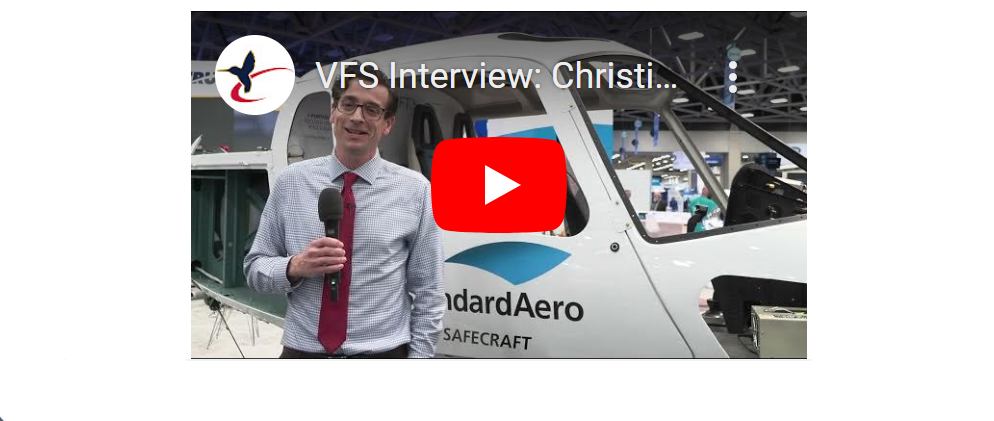
On this video series, the StableLight™ development team provides valuable insight into the unique capabilities, features, and 4-axis technology that only a transport category AutoPilot can bring to your AS350/H125 aircraft operations.
Enter the new era of safety and performance for light helicopters. Lift-off!
These Standard Terms and Conditions of Sale for Services (“Terms”) shall govern the maintenance, repair, overhaul, chemical processing and new make services (“Services”) to be provided on Customer’s components or accessories (collectively “Components“). The pricing shall be as set forth in StandardAero’s catalog, quotation document, or other StandardAero communicated offer document (“Offer”). These Terms and the Offer will comprise the entire agreement (“Agreement”) between the Parties for Services. “Customer” refers to the entity listed on StandardAero’s Offer. StandardAero and Customer may be individually referred to as a “Party” or collectively as “Parties”.
This Confidential Information Agreement for Orders (“Agreement”) establishes the terms of use, handling, protection, and safeguarding by Customer Confidential Information “Confidential Information” for Customer issuing orders (“Orders”) to a StandardAero Affiliate to procure maintenance, repair or overhaul services, chemical processing, grinding, metal finishing, non-destructive testing, or other related services (“Services”) from StandardAero (hereinafter the “Purpose”). For purposes of this Agreement, “Customer” shall mean the person requesting Services from StandardAero and a “StandardAero Affiliate” shall mean the party and/or site that the Customer is requesting the Services from.